The management choices behind Eucalyptus plantations

More trees or bigger trees?

Every plantation begins with a deceptively simple decision: how many trees should be allowed to grow? Plant many trees close together and the site is rapidly occupied, producing a large amount of wood per hectare. Give individual trees more space—or remove competitors through thinning—and something different happens: growth becomes concentrated in fewer stems, allowing them to become larger much faster. This trade-off lies at the heart of plantation forestry. In our study, Thinning regimes and initial spacing for Eucalyptus plantations in Brazil, we examined this question using 188 experimental plots in four clonal Eucalyptus trials in Bahia and Espírito Santo. The experiments compared different planting densities and a range of thinning strategies, from leaving stands untouched to removing most trees early in the rotation.

Before thinning, plantations established at 1,111 trees per hectare suffered considerably greater mortality than those planted at 667 trees per hectare, although early diameter growth was surprisingly similar. The major differences appeared once competition intensified. When stands were thinned early—at about 2.5 years—and only 150 trees per hectare were retained, growth became concentrated into those selected trees. By age 11.5 years, mean diameters of around 35–38 cm were achieved in these intensive regimes. The most intensively thinned treatment produced a mean tree diameter around 78% greater than the unthinned treatment. But there was a price: concentrating resources into fewer large trees reduced total stand basal area. In forestry, therefore, faster growth of individual trees does not necessarily mean greater production of wood at stand level.

There is no universally “best” thinning regime. The best strategy depends on what the forest is expected to produce. If the objective is pulp, energy or large quantities of relatively small-diameter wood, maintaining many trees can maximise stand stocking. If the objective is sawn timber or other higher-value solid wood products, early thinning can redirect the productive capacity of the site towards a much smaller number of large stems. Intermediate strategies can even produce several products during the same rotation, harvesting commercial wood in successive thinnings while keeping selected trees for a later final harvest. Plantation forestry is therefore not simply about maximising growth; it is about deciding where that growth should go. Understanding these trade-offs between biomass production, tree size, rotation length and product value remains an important part of research Biomass Production, (website).


Read the study

Ferraz Filho, A. C., Mola-Yudego, B., González-Olabarria, J. R., & Scolforo, J. R. S. (2018). Thinning regimes and initial spacing for Eucalyptus plantations in Brazil. Anais da Academia Brasileira de Ciências, 90(1), 255–265. https://doi.org/10.1590/0001-3765201720150453 [RG]

Full article: Read the open-access article at SciELO

What if Europe grew more grass?

A climate-soil strategy

Grass hardly looks like a technological solution to climate change. It grows beside roads, between fields and across millions of hectares of European countryside. Yet its apparent simplicity hides something interesting. Modern agriculture has increasingly specialised in annual crops, and that intensification has come with a legacy of depleted soil carbon, nutrient losses, erosion and other environmental pressures. What would happen if perennial grass were deliberately brought back into crop rotations—not simply as another crop, but as part of the environmental infrastructure of agricultural landscapes? This was the question behind our study, Large-scale deployment of grass in crop rotations as a multifunctional climate mitigation strategy. Instead of looking at a handful of experimental fields, we modelled more than 81,000 sub-watersheds across the EU27 and the United Kingdom, asking where additional grass could make sense and what it might achieve.

The interesting part is that the answer is not only about carbon. Bringing perennial grass into rotations could help rebuild soil organic carbon while simultaneously producing large quantities of biomass and protein. The same change could reduce nitrogen losses to water, limit wind and water erosion and, in some landscapes, contribute to flood mitigation. If some of the harvested grass were processed in green biorefineries, it could also become feed protein, biogas and raw material for other biobased products. In the scenarios explored in the study, the combined annual greenhouse-gas savings from soil-carbon sequestration and replacing natural gas with grass-derived biogas were estimated to be equivalent to roughly 13–48% of current greenhouse-gas emissions from European agriculture. This is not a prediction that such savings will automatically occur: it is a modelled estimate of the scale of the opportunity under widespread deployment. But it reveals an important point. A hectare of agricultural land does not necessarily have to deliver just one service. Managed differently, the same landscape can produce commodities while also storing carbon, protecting soils and improving water quality.

There is, of course, a catch—and it may be the most interesting part of the story. Growing grass is easy; creating an economic system that values everything the grass does is much harder. Farmers need markets for the biomass, biorefineries need investment and reliable supply chains, and environmental benefits such as carbon sequestration or cleaner water need mechanisms that translate them into real incentives. The study therefore points beyond a simple choice between food production and environmental protection. The challenge is to design agricultural and bioeconomy systems in which the two reinforce one another. In that sense, grass becomes more than a crop: it becomes a possible bridge between agriculture, renewable energy, soil restoration and the emerging circular bioeconomy. This connection between biomass production and the wider functions of landscapes is also central to research at the Biomass Production. Further publications and research activities are available here.


Co-benefits of introducing grass production in crop rotations with the primary objective of enhancing soil organic carbon. The figure shows the relative to contribution toward reaching the classification “low impact” at the landscape scale for nitrogen emissions to water, soil loss by water erosion, and soil loss by wind erosion, respectively, in the low-estimate (left) and high-estimate (right) scenarios. Landscapes that already have a “low” or lower impact are excluded.


Read the study

Englund, O., Mola-Yudego, B., Börjesson, P., Cederberg, C., Dimitriou, I., Scarlat, N., & Berndes, G. (2023). Large-scale deployment of grass in crop rotations as a multifunctional climate mitigation strategy. GCB Bioenergy, 15(2), 166–184.

Full-text article: Open-access PDF
Journal: GCB Bioenergy — Wiley
Article page: Wiley Online Library
DOI: https://doi.org/10.1111/gcbb.13015

Wind damage can trigger years of forest vulnerability

Windstorms are among the most important natural disturbances in Northern Europe, causing extensive tree mortality, timber losses and long-lasting changes in forest structure. Large-scale windstorm damage has increased across Central and Northern European forests in recent decades, while in boreal regions such as Finland, warmer winters and shorter periods of frozen soil may further reduce tree stability and increase vulnerability to wind.

The consequences of wind damage, however, can continue long after the storm has passed. A large-scale study of more than 70,000 wind-damaged forest stands across Finland found that forests affected by wind may remain vulnerable to subsequent bark beetle or snow damage in the years that follow. These disturbance pathways depend on forest structure, climate, topography and tree-species composition.

Forest disturbances are often considered separately, but in fact, one disturbance can change the conditions under which the next one occurs,” says Doctoral Researcher Qianqian Tian, lead author of the study at the University of Eastern Finland. “We wanted to understand what happens after wind damage and whether forests subsequently affected by bark beetle or snow damage share the same characteristics.”

Forest structure played an important role in shaping what happened after wind damage. Warmer conditions and forest composition helped distinguish stands subsequently affected by bark beetles from those affected by snow, while mixed stands showed a greater tendency towards bark beetle rather than snow damage when compared with pine-dominated stands. These differences suggest that post-storm vulnerability depends not only on the initial disturbance, but also on the structural and environmental conditions of the affected forest.

This has important practical implications, since it can help us adapt monitoring and forest management after a storm to reduce future losses,” says Professor Blas Mola-Yudego, coordinator of the study at the University of Eastern Finland. “After a storm, a dense and structurally heterogeneous forest in southern Finland may require different attention than a pine-dominated stand in North Karelia. Forest risk management should consider what may happen next, rather than focusing only on the damage that has already occurred.

The timing of subsequent disturbances was also notable. Around 94% of wind–snow damage sequences and 76% of wind–bark beetle sequences occurred within five years of the initial wind disturbance, while more than 90% of both types of sequences occurred within eight years.

The years immediately following a major wind disturbance can therefore be particularly important for monitoring and preventing further damage, but our results also show that we should not look for the same warning signs everywhere,” says Marina Peris-Llopis, co-author of the study.

Mari Selkimäki, lecturer in forest planning at the University of Eastern Finland, highlights the importance of the large-scale forest information used in the research: “Combining national forest data with long-term damage records allowed us to look beyond individual storms and identify broader patterns in how disturbances interact across boreal forests.

More than 70,000 observations openly available for further research

An important outcome of the study is that the processed dataset underlying the analysis has been made openly available for reuse and further modelling. The dataset contains information for more than 70,000 wind-damaged forest stands across Finland, combining variables describing forest structure and species composition with climate, topography and subsequent bark beetle and snow damage.

The dataset can therefore be used beyond the analyses presented in the paper, for example to test alternative statistical or machine-learning approaches, investigate disturbance interactions, develop risk models, or compare post-disturbance dynamics with other forest regions.

➡️ Open dataset: https://doi.org/10.5281/zenodo.21060824

The results support more targeted monitoring after storms. Structurally heterogeneous forests containing spruce, particularly in warmer areas, may deserve greater attention for subsequent bark beetle damage, whereas forests on steeper terrain may require closer monitoring for snow damage. Maintaining stand stability and avoiding excessive stand density may also help reduce vulnerability to interacting disturbances.

➡️ Read the paper: Tian, Q., Peris-Llopis, M., Selkimäki, M., & Mola-Yudego, B. (2026). Post-wind vulnerability of boreal forests: Structural and site drivers of sequential snow and bark beetle disturbances. Forest Ecology and Management, 619, 124074.

Spatial distribution of forest damage records and sequential disturbance pathways in Finland. Panel (a) shows the distribution of individual wind, snow, and bark beetle damage polygons. Panel (b) shows locations where wind damage was followed by bark beetle damage, and panel (c) shows locations where wind damage was followed by snow damage in a subsequent year. Panel (a) is displayed as polygons, whereas in panels (b) and (c), points represent the locations of sequential disturbance records included in the analysis.


These findings are part of a broader pan-European research effort aimed at developing more resilient forests and supporting climate-change adaptation across Europe, funded by the European Union's Horizon Europe Programme through the Eco2Adapt project and by the Strategic Research Council of Finland through the ForTran project.

Can Energy Crops Thrive in the Cold? Development of Reed Canary Grass in Sweden

Can an energy crop remain productive where the climate becomes too cold for many conventional alternatives? Reed canary grass (Phalaris arundinacea L.) provides an interesting test case. This perennial grass is highly tolerant of frost, can grow under relatively difficult soil conditions and can be harvested using conventional agricultural machinery. It has therefore attracted considerable attention as a biomass crop in Northern Europe. But its potential cannot be judged from experimental yields alone. A nationwide assessment of reed canary grass cultivation in Sweden shows how strongly its real-world performance depends on climate, land use, harvesting efficiency and agricultural policy.

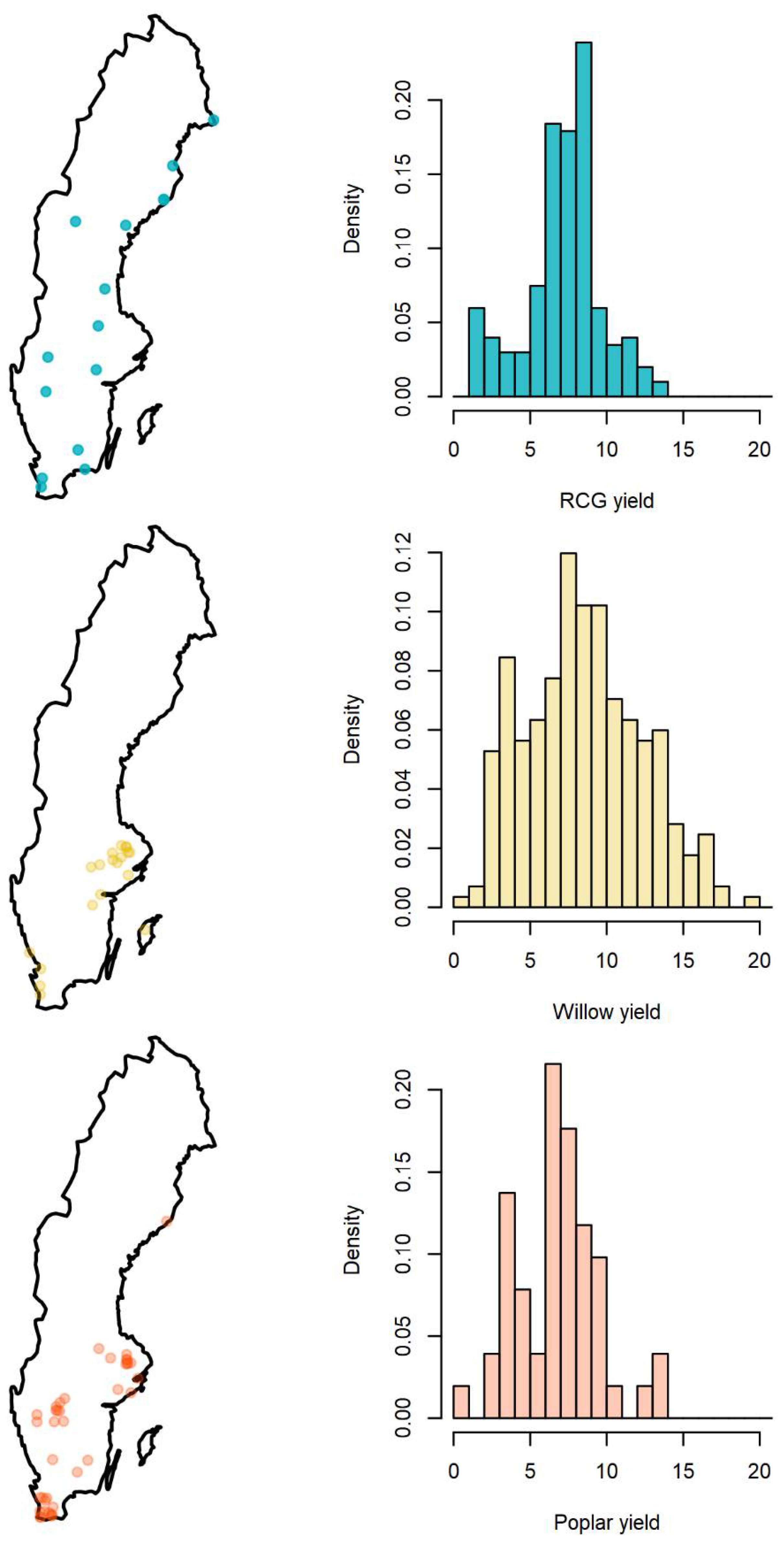
The study analysed the development of Swedish reed canary grass cultivation between 2001 and 2020 and compared it with the country's other major lignocellulosic energy crops: willow and poplar/hybrid aspen. Agricultural registers, commercial statistics, experimental trials, climatic data and spatial analysis were combined to examine not only how much biomass the crop produces, but also where it is actually grown. Reed canary grass was concentrated considerably farther north than willow and poplar, and was associated with colder and generally less productive agricultural land. Mean annual precipitation at reed canary grass sites was approximately 582 mm, compared with 606 mm for willow and 655 mm for poplar/hybrid aspen. The complete analysis of these climatic and spatial patterns is available here.

Despite these less favourable growing conditions, the crop performed surprisingly well. Experimental trials produced average yields of approximately 6 oven-dry tonnes (odt) ha−1 year−1, broadly comparable with willow and poplar trials, while individual observations approached 15 odt ha−1 year−1. The more important lesson, however, emerges when experimental results are compared with commercial agriculture. Actual Swedish production averaged only around 3.4–3.5 odt ha−1 year−1. Harvest losses can be substantial, and effective harvested biomass may represent only around half of the biological yield. The results therefore illustrate why experimental biomass yields should be used cautiously when evaluating commercial energy-crop systems.

The land-use history provides another important part of the story. New reed canary grass fields primarily replaced meadow land and, to a lesser extent, cereal cultivation. But the direction changed when plantations were abandoned: after 2009, former reed canary grass fields increasingly returned to cereal production. This matters environmentally because the consequences of establishing a perennial crop depend strongly on what it replaces. Converting annual cropland may improve soil-carbon dynamics and reduce some agricultural impacts, whereas replacing an existing grassland can produce a very different environmental balance. Land-use trajectories therefore need to be considered alongside biomass yields when assessing energy crops, carbon sequestration or broader ecosystem effects.

Yet again, the clearest signal came from policy. Swedish cultivation expanded rapidly after 2005, reaching around 800 ha in 2009, but subsequently declined to approximately 550 ha. These changes closely followed modifications to agricultural support schemes and incentives for industrial and energy crops. The experience was even more dramatic in Finland, where reed canary grass expanded to tens of thousands of hectares before declining rapidly after policy support changed. Reed canary grass therefore illustrates a broader challenge for the bioeconomy: being biologically suitable does not necessarily make a biomass crop economically sustainable. Farmers require sufficiently predictable markets, management costs and revenues if cultivation is to persist after direct subsidies disappear.

The comparison with willow and poplar is interesting: reed canary grass can achieve similar commercial biomass yields while occupying colder and less agriculturally productive locations, and its establishment costs can be lower because conventional farm equipment can be used. This gives the crop a potentially complementary role rather than making it simply a competitor to woody energy plantations. At the same time, harvesting losses, biomass quality, narrow economic margins and sensitivity to policy incentives remain important limitations. The Swedish experience suggests that successful biomass systems must therefore be evaluated simultaneously as biological, spatial, economic and policy systems.

Further information: Research on biomass production, plantation forestry, energy crops and land-use dynamics is available through the Biomass Production research group at the University of Eastern Finland. Further publications and activities can also be found at sites.uef.fi/biopro.

Reference

Mola-Yudego, B., Xu, X., Englund, O., & Dimitriou, I. (2021). Reed Canary Grass for Energy in Sweden: Yields, Land-Use Patterns, and Climatic Profile. Forests, 12(7), 897. https://doi.org/10.3390/f12070897

Estimated distribution of yields (odt ha−1 year−1) for reed canary grass compared to willow and poplar in different trials along the country (see maps) for the period of 1991–2010.


What Do Fast-Growing Plantations Really Replace? A Better Baseline for energy crop's LCA

Environmental assessments of fast-growing plantations often begin with a deceptively simple assumption: that the plantation replaces an average cereal field. Yet, a realistic baseline is not a technical detail. It is part of the system being assessed. Whether willow, poplar or hybrid aspen replaces winter wheat, spring barley, temporary grassland or fallow land can substantially influence estimates of greenhouse-gas balances, soil carbon, nutrient losses, biodiversity effects and opportunity costs. For this reason, understanding where plantations are established, and what they replace, is essential for credible life-cycle assessment, land-use modelling and bioeconomy planning.

A 30-year assessment of fast-growing plantations in Sweden provides one of the most detailed empirical baselines currently available. The study traced the development of willow, poplar and hybrid aspen plantations between 1986 and 2017, combining plantation records, agricultural land-register data and spatial analysis. The results showed that willow remained the dominant system, but its area declined from approximately 14,000 ha around 2001 to 7,785 ha in 2017. Poplar and hybrid aspen partly offset this decline, reaching 1,738 ha and 676 ha, respectively, by 2017. In total, Sweden still maintained approximately 10,200 ha of fast-growing woody plantations, although their composition, location and agricultural context changed markedly over time. The full analysis is available here.

The results also showed that plantation establishment cannot be separated from changing policies and agricultural markets. Willow expansion was initially linked to Swedish policy support for energy crops, whereas its subsequent decline coincided with reduced incentives and rising cereal prices after 2007. Average cereal prices increased sharply relative to the 1990–2006 period, by approximately 49% for wheat, 40% for barley and 22% for oats. At the same time, many former willow plantations returned to cereal cultivation. However, new plantations were not established only on cereal land. In 2016, new willow plantations were commonly associated with former spring barley, winter wheat, temporary grassland and fallow land. Poplar plantations showed an even clearer association with lower-intensity agricultural land uses, particularly fallow land and temporary grass. These replacement patterns provide a practical basis for defining differentiated reference scenarios.

This distinction matters greatly for LCA. A plantation replacing intensively managed cereal land may generate different environmental trade-offs than one established on fallow land or temporary grassland, where fertiliser use, machinery inputs and baseline carbon dynamics are already lower. Treating all plantation establishment as a cereal-to-wood transition may therefore overestimate some environmental benefits or overlook relevant impacts. Rather than relying on a single generic counterfactual, future assessments could use a weighted portfolio of agricultural reference systems, reflecting the observed shares of cereals, grasses and fallow land replaced by each plantation type. Such an approach would make evaluations of short-rotation woody crops more spatially realistic, more transparent and more relevant for policy.

The study also illustrates that plantation systems are dynamic rather than uniform. Willow plantations increasingly concentrated in southern and more productive agricultural areas, whereas poplar tended to expand on less productive land. Smaller plantation units became more frequent, particularly those below one hectare, while large systems above ten hectares became relatively uncommon. These patterns reflect not only land availability, but also changing farmer preferences, local biomass markets, management choices and wider agricultural conditions. For researchers seeking robust baseline scenarios for plantations, the central message is clear: the environmental performance of a plantation cannot be assessed independently from the land-use trajectory that made it possible.

Further information: Research on biomass production, plantation forestry and land-use dynamics is available through the Biomass Production research group at the University of Eastern Finland. Further publications and activities can also be found at sites.uef.fi/biopro.

Reference

Xu, X., & Mola-Yudego, B. (2021). Where and when are plantations established? Land-use replacement patterns of fast-growing plantations on agricultural land. Biomass and Bioenergy, 144, Article 105921. https://doi.org/10.1016/j.biombioe.2020.105921

For related research, visit the Biomass Production research group, University of Eastern Finland.


Mapping yields of energy crops in Northern Europe

Willow plantations have long been considered a promising option for #bioenergy in northern Europe. But a basic question remains essential for both investors and #policy makers: how much biomass can actually be produced, and where. It is easy to speak about potential in general terms, but supply planning requires something much more concrete, spatially explicit estimates grounded in real production data.

In this study, we used harvesting records from 1,790 commercial willow plantations in Sweden and combined them with climatic variables to estimate productivity across northern Europe. Rather than relying only on experimental plots, the work was based on commercial plantations, which makes the estimates closer to the biomass that can realistically be harvested and mobilised in practice. The models were then extended to Sweden, Norway, Denmark, Finland, Estonia, Latvia, Lithuania, and the Baltic coastal areas of Germany and Poland.

What we found was a strong spatial variability in yield potential. Precipitation during the growing season, together with key temperature variables, explained an important part of that variation. Under high-performance conditions, average first-rotation yields were above 7 odt ha⁻¹ yr⁻¹ in the Baltic coast of Germany, above 6 in Denmark, above 5 in the Baltic coast of Poland, and between 4 and 5 in much of the remaining study area. This matters because it shows that not all land, and not all regions, offer the same opportunity for energy crops, even within relatively similar climatic zones.

This is, in my view, where the practical value of the study lies. Biomass strategies should not be discussed only in terms of total land availability, but also in terms of realistic productivity, regional differences, and the climatic limits of the crop. Better spatial estimates can improve hashtag#energysystems planning, reduce overly optimistic assumptions, and support more informed decisions on where willow can be a viable part of the renewable energy mix.

At the same time, the study also reminded us of something important: climate explains much, but not everything. Soil conditions, clone choice, and management still matter greatly, especially in the most productive plantations. In that sense, these maps should not be read as fixed truths, but as a solid reference for planning, comparison, and future improvement. For #bioeconomy and #renewableenergy, that is already a very useful step forward.

Download the TIF layers:

gcbb12332-sup-0001-FigS1.tifTIFF image, 5.9 MBFigure S1. Yield estimates based on climatic variables at 1 × 1 km resolution for willow plantations on agricultural areas of northern Europe for a lowest performance scenario.
gcbb12332-sup-0002-FigS2.tifTIFF image, 5.9 MBFigure S2. Yield estimates based on climatic variables at 1 × 1 km resolution for willow plantations on agricultural areas of northern Europe for a middle performance scenario.
gcbb12332-sup-0003-FigS3.tifTIFF image, 5.5 MBFigure S3. Yield estimates based on climatic variables at 1 × 1 km resolution for willow plantations on agricultural areas of northern Europe for a highest performance scenario.
gcbb12332-sup-0004-Appendix.docxWord document, 249.7 KBAppendix S1. Average yield response (marginal effect) by climatic variable.


Source: Mola-Yudego, B., Rahlf, J., Astrup, R., & Dimitriou, I. (2016). Spatial yield estimates of fast-growing willow plantations for energy based on climatic variables in northern Europe. GCB Bioenergy, 8, 1093–1105. https://doi.org/10.1111/gcbb.12332

Yield estimates of energy crops in the Nordic area, Mola-Yudego et al., 2015. https://doi.org/10.1111/gcbb.12332 Willow, energy crops, fast growing plantations, Europe

Where Biomass Belongs: Mapping Europe’s Energy Crops to Build More Diverse Landscapes

As Europe accelerates its shift toward a low-carbon economy, the pressure to deliver sustainable biomass is rising fast, yet the hardest question is no longer only what to grow, it is where to grow it. Fast-growing plantations and perennial energy grasses can underpin biofuels and biomaterials, while also supporting carbon storage, water protection, and soil functions. However, when these systems expand as large, poorly integrated blocks, they can simplify land use patterns, weaken habitat variety, and reduce ecological resilience. The promise of the bioeconomy, therefore, depends on spatial intelligence: biomass systems need to be placed as part of the landscape, not imposed on top of it.

A recent open-access study addressed this challenge by building one of the most comprehensive empirical pictures yet of biomass production systems across Europe. Using harmonised spatial data for 426,783 fields and stands, covering 2,140,568 hectares across 17 countries, the authors characterised seven representative systems, including eucalypt, radiata pine, black locust, poplar and hybrid aspen, willow, miscanthus, and reed canary grass. They then assessed the land-use context around each site using 1 km buffers and CORINE land cover, translating “how mixed is the surrounding landscape?” into a Land Use Diversity Index based on Shannon diversity. The result was a practical lens for policy and planning: it showed not just where biomass is today, but where it is likely to diversify, or homogenise, the landscapes around it.

The key insight was that context dominates: the same crop can be either a corridor of diversity or an engine of simplification, depending on where it is inserted. Willow stood out as the strongest candidate for diversification, with 57% of willow plantations located in homogeneous, agriculture-dominated areas, where woody strips can introduce structural variety and potentially strengthen multifunctionality. Poplar and black locust also showed meaningful opportunities, with sizeable shares of stands situated where they could add “forested elements” into agricultural matrices. By contrast, miscanthus was often concentrated in low-diversity agricultural settings, suggesting that, without deliberate spatial planning, it may do little to raise local land-use diversity. The study also highlighted a recurring risk signal: biomass areas were highly unevenly distributed, with the largest 20% of stands accounting for the majority of total area, and thousands of very large polygons, a pattern that can translate into landscape dominance when not carefully governed. A sustainable bioeconomy is a design problem, and better maps, better metrics, and better placement rules are as important as better crops.

Read more:
Pineda-Zapata, S., & Mola-Yudego, B. (2025). European biomass production systems: Characterization and potential contribution to land use diversity. GCB Bioenergy, 17, e70057. https://doi.org/10.1111/gcbb.70057
DOI: 10.1111/gcbb.70057


China’s Rural Energy Transition: Household Pathways Beyond Coal and Firewood

The recent developments in geopolitics have been a reminder that energy is never just #energy. For decades, the global oil system has been attached to collateral developments and power struggles. As fuel becomes strategically indispensable, some states stop treating supply as a market question and start treating it as a power question.

On top of the environmental effects linked to their consumption, #fossil #fuels have been framed as national interest with hard edges. We witness in recent events: energy security slide into coercion to third countries, and sometimes into force.

In this context it is interesting to study countries aiming to buy their way out of energy dependence by changing the fuel itself. Instead of competing for oil’s geography, the route to independence goes through millions of small, local energy decisions. Decisions which at the same time suppose a cleaner alternative, from solar for electricity, #bioenergy heating options, and the gradual replacement of #coal and #oil.

China has increased significantly and consistently the share of renewables in the energy mix, achieving simultaneously energy independence and lower carbon emissions. The #energy #transition has started in the cities, but has also reached rural areas, and while it is often discussed in terms of grids and powerplants, the real shift happens at household level too. That creates a practical policy question: where do traditional fuels still dominate, and which levers can accelerate cleaner options without ignoring local realities?

In Chinese rural areas, #coal (76%) and biomass residues, especially tree branches, #firewood (84%) and #crop #residues (38%), remain central for cooking and heating. The use of LPG is, however, limited (24%) and strongly concentrated. Our future projections suggest solar uptake could expand substantially, alongside a decline of up to ~50% in coal and firewood if supportive conditions continue. Subsidies and awareness matter, and familiarity with key renewable policies is still low in some counties, which points to information gaps as a real barrier, not just income or technology.

Region-specific strategies, combining solar and biogas diffusion with smarter, cleaner use of agricultural and forestry residues for local bioenergy, backed by targeted incentives and outreach, are setting the ground for a fast energy transition in rural China, with global geopolitical and climatic effects.

Read the PDF here
Xu, X., Li, Q., Khanam, T., Selkimäki, M., Liu, G., & Mola-Yudego, B. (2025). Rural Energy Consumption in Central China: Regional Patterns, Socioeconomic Influences, and Pathways to Sustainability. Food and Energy Security, 14, e70176. https://doi.org/10.1002/fes3.70176


This work was supported by the National Key R&D Program of China, Chinese Universities Scientific Fund, the Research Council of Finland mobility programme and UNITE flagship.

Blackwater pulse

Post-fire effects on dissolved organic carbon concentrations in freshwater streams: a meta-analysis

Wildfires are often discussed through smoke, trees, and erosion, but one of their quieter legacies can travel downstream. Dissolved organic carbon (DOC), the dark, tea-coloured fraction of organic matter in water, tends to rise after fire events, especially during storms. That matters because DOC is not only a carbon-export signal, it also shapes water treatment difficulty and can increase the formation potential of disinfection by-products when drinking-water is chlorinated.

In a recent meta-analysis, Polack and colleagues synthesised evidence on how forest fires affect peak-flow DOC concentrations in freshwater streams, focusing on the moments that often drive the largest exports: high-discharge events. Across 52 effect sizes from 14 peer-reviewed publications, their multi-level modelling estimated an average 26% increase in peak-flow DOC after fire, with the strongest signal occurring early in recovery.

The pattern was not uniform. The largest increases were reported for small catchments (≤10 km²), consistent with short flow paths and stronger hillslope–channel connectivity after canopy loss and altered infiltration. Climate and landscape context also mattered: humid continental sites showed clear increases, while subarctic sites tended towards declines, suggesting that post-fire DOC trajectories can differ substantially where permafrost and cold-region hydrology dominate. The analysis further indicated stronger responses in conifer-dominated systems, and soil texture appeared informative, with loam and clay loam showing particularly pronounced increases.

Mechanistically, the synthesis aligned two ideas that are intuitive yet easy to under-sample in practice: (i) post-fire hydrology can increase near-surface runoff and strengthen the connection between burnt hillslopes and channels, and (ii) fire can generate a pool of more labile residues that leach during storm events. The authors also highlighted a practical gap for both science and management: discharge-resolved chemistry remains scarce in the literature, and geographic coverage is still skewed, which limits transferability. The implication is straightforward: if the goal is to anticipate water-quality risk after fire, monitoring needs to follow the hydrograph, not only the calendar.

Find the study: Journal of Hydrology  |  ResearchGate

Read the PDF here
POLACK, J., PUMPANEN, J., MOLA-YUDEGO, B., & BERNINGER, F. 2025. Post-fire effects on dissolved organic carbon concentrations in freshwater streams: a meta-analysis. Journal of Hydrology, 134319. doi:10.1016/j.jhydrol.2025.134319

Improving woodfuel governance in Burkina Faso: The experts' assessment


AREVALO J. 2016. Improving woodfuel governance in Burkina Faso: The experts' assesment. Renewable and Sustainable Energy Reviews Volume 57, May 2016, Pages 1398–1408 doi:10.1016/j.rser.2015.12.178. 
Over 80% of Sub-Saharan population depend on woodfuels as their main energy source, mainly firewood and charcoal. In Burkina Faso, despite the absence of reliable studies, this dependency is expected to continue and even increase in the next decades. With some of the highest annual population increments and lowest indexes of human development in the world, Burkina Faso is also among the most vulnerable countries to climate change. This study examines the challenges of governance, production and use of woodfuels in Burkina Faso on the basis of an extensive literature review and the views elicited through 13 in-depth interviews with local experts. With poverty as the underlying driver, agricultural expansion is identified as the principle driver of deforestation, followed by woodfuel production. Intensification of agriculture, agroforestry practices and promotion of on non-timber forest product businesses are some of the key opportunities recognised. While decentralisation is seen as an opportunity for sustainable resource management, the lack of resources, unclear tenure regime and corruption need to be urgently addressed. An improved management system in the Forest Management Units is also needed to avoid forest degradation. The 20 concrete recommendations made in the study should be further investigated for their consideration in a future wood energy strategy.
ScienceDirect [link]
ResearchGate [link]

Firewood truck bound to Ouagadougou