Showing posts with label Sci. Publication. Show all posts

What Do Fast-Growing Plantations Really Replace? A Better Baseline for energy crop's LCA

Environmental assessments of fast-growing plantations often begin with a deceptively simple assumption: that the plantation replaces an average cereal field. Yet, a realistic baseline is not a technical detail. It is part of the system being assessed. Whether willow, poplar or hybrid aspen replaces winter wheat, spring barley, temporary grassland or fallow land can substantially influence estimates of greenhouse-gas balances, soil carbon, nutrient losses, biodiversity effects and opportunity costs. For this reason, understanding where plantations are established, and what they replace, is essential for credible life-cycle assessment, land-use modelling and bioeconomy planning.

A 30-year assessment of fast-growing plantations in Sweden provides one of the most detailed empirical baselines currently available. The study traced the development of willow, poplar and hybrid aspen plantations between 1986 and 2017, combining plantation records, agricultural land-register data and spatial analysis. The results showed that willow remained the dominant system, but its area declined from approximately 14,000 ha around 2001 to 7,785 ha in 2017. Poplar and hybrid aspen partly offset this decline, reaching 1,738 ha and 676 ha, respectively, by 2017. In total, Sweden still maintained approximately 10,200 ha of fast-growing woody plantations, although their composition, location and agricultural context changed markedly over time. The full analysis is available here.

The results also showed that plantation establishment cannot be separated from changing policies and agricultural markets. Willow expansion was initially linked to Swedish policy support for energy crops, whereas its subsequent decline coincided with reduced incentives and rising cereal prices after 2007. Average cereal prices increased sharply relative to the 1990–2006 period, by approximately 49% for wheat, 40% for barley and 22% for oats. At the same time, many former willow plantations returned to cereal cultivation. However, new plantations were not established only on cereal land. In 2016, new willow plantations were commonly associated with former spring barley, winter wheat, temporary grassland and fallow land. Poplar plantations showed an even clearer association with lower-intensity agricultural land uses, particularly fallow land and temporary grass. These replacement patterns provide a practical basis for defining differentiated reference scenarios.

This distinction matters greatly for LCA. A plantation replacing intensively managed cereal land may generate different environmental trade-offs than one established on fallow land or temporary grassland, where fertiliser use, machinery inputs and baseline carbon dynamics are already lower. Treating all plantation establishment as a cereal-to-wood transition may therefore overestimate some environmental benefits or overlook relevant impacts. Rather than relying on a single generic counterfactual, future assessments could use a weighted portfolio of agricultural reference systems, reflecting the observed shares of cereals, grasses and fallow land replaced by each plantation type. Such an approach would make evaluations of short-rotation woody crops more spatially realistic, more transparent and more relevant for policy.

The study also illustrates that plantation systems are dynamic rather than uniform. Willow plantations increasingly concentrated in southern and more productive agricultural areas, whereas poplar tended to expand on less productive land. Smaller plantation units became more frequent, particularly those below one hectare, while large systems above ten hectares became relatively uncommon. These patterns reflect not only land availability, but also changing farmer preferences, local biomass markets, management choices and wider agricultural conditions. For researchers seeking robust baseline scenarios for plantations, the central message is clear: the environmental performance of a plantation cannot be assessed independently from the land-use trajectory that made it possible.

Further information: Research on biomass production, plantation forestry and land-use dynamics is available through the Biomass Production research group at the University of Eastern Finland. Further publications and activities can also be found at sites.uef.fi/biopro.

Reference

Xu, X., & Mola-Yudego, B. (2021). Where and when are plantations established? Land-use replacement patterns of fast-growing plantations on agricultural land. Biomass and Bioenergy, 144, Article 105921. https://doi.org/10.1016/j.biombioe.2020.105921

For related research, visit the Biomass Production research group, University of Eastern Finland.


Mapping yields of energy crops in Northern Europe

Willow plantations have long been considered a promising option for #bioenergy in northern Europe. But a basic question remains essential for both investors and #policy makers: how much biomass can actually be produced, and where. It is easy to speak about potential in general terms, but supply planning requires something much more concrete, spatially explicit estimates grounded in real production data.

In this study, we used harvesting records from 1,790 commercial willow plantations in Sweden and combined them with climatic variables to estimate productivity across northern Europe. Rather than relying only on experimental plots, the work was based on commercial plantations, which makes the estimates closer to the biomass that can realistically be harvested and mobilised in practice. The models were then extended to Sweden, Norway, Denmark, Finland, Estonia, Latvia, Lithuania, and the Baltic coastal areas of Germany and Poland.

What we found was a strong spatial variability in yield potential. Precipitation during the growing season, together with key temperature variables, explained an important part of that variation. Under high-performance conditions, average first-rotation yields were above 7 odt ha⁻¹ yr⁻¹ in the Baltic coast of Germany, above 6 in Denmark, above 5 in the Baltic coast of Poland, and between 4 and 5 in much of the remaining study area. This matters because it shows that not all land, and not all regions, offer the same opportunity for energy crops, even within relatively similar climatic zones.

This is, in my view, where the practical value of the study lies. Biomass strategies should not be discussed only in terms of total land availability, but also in terms of realistic productivity, regional differences, and the climatic limits of the crop. Better spatial estimates can improve hashtag#energysystems planning, reduce overly optimistic assumptions, and support more informed decisions on where willow can be a viable part of the renewable energy mix.

At the same time, the study also reminded us of something important: climate explains much, but not everything. Soil conditions, clone choice, and management still matter greatly, especially in the most productive plantations. In that sense, these maps should not be read as fixed truths, but as a solid reference for planning, comparison, and future improvement. For #bioeconomy and #renewableenergy, that is already a very useful step forward.

Download the TIF layers:

gcbb12332-sup-0001-FigS1.tifTIFF image, 5.9 MBFigure S1. Yield estimates based on climatic variables at 1 × 1 km resolution for willow plantations on agricultural areas of northern Europe for a lowest performance scenario.
gcbb12332-sup-0002-FigS2.tifTIFF image, 5.9 MBFigure S2. Yield estimates based on climatic variables at 1 × 1 km resolution for willow plantations on agricultural areas of northern Europe for a middle performance scenario.
gcbb12332-sup-0003-FigS3.tifTIFF image, 5.5 MBFigure S3. Yield estimates based on climatic variables at 1 × 1 km resolution for willow plantations on agricultural areas of northern Europe for a highest performance scenario.
gcbb12332-sup-0004-Appendix.docxWord document, 249.7 KBAppendix S1. Average yield response (marginal effect) by climatic variable.


Source: Mola-Yudego, B., Rahlf, J., Astrup, R., & Dimitriou, I. (2016). Spatial yield estimates of fast-growing willow plantations for energy based on climatic variables in northern Europe. GCB Bioenergy, 8, 1093–1105. https://doi.org/10.1111/gcbb.12332

Yield estimates of energy crops in the Nordic area, Mola-Yudego et al., 2015. https://doi.org/10.1111/gcbb.12332 Willow, energy crops, fast growing plantations, Europe

Where Biomass Belongs: Mapping Europe’s Energy Crops to Build More Diverse Landscapes

As Europe accelerates its shift toward a low-carbon economy, the pressure to deliver sustainable biomass is rising fast, yet the hardest question is no longer only what to grow, it is where to grow it. Fast-growing plantations and perennial energy grasses can underpin biofuels and biomaterials, while also supporting carbon storage, water protection, and soil functions. However, when these systems expand as large, poorly integrated blocks, they can simplify land use patterns, weaken habitat variety, and reduce ecological resilience. The promise of the bioeconomy, therefore, depends on spatial intelligence: biomass systems need to be placed as part of the landscape, not imposed on top of it.

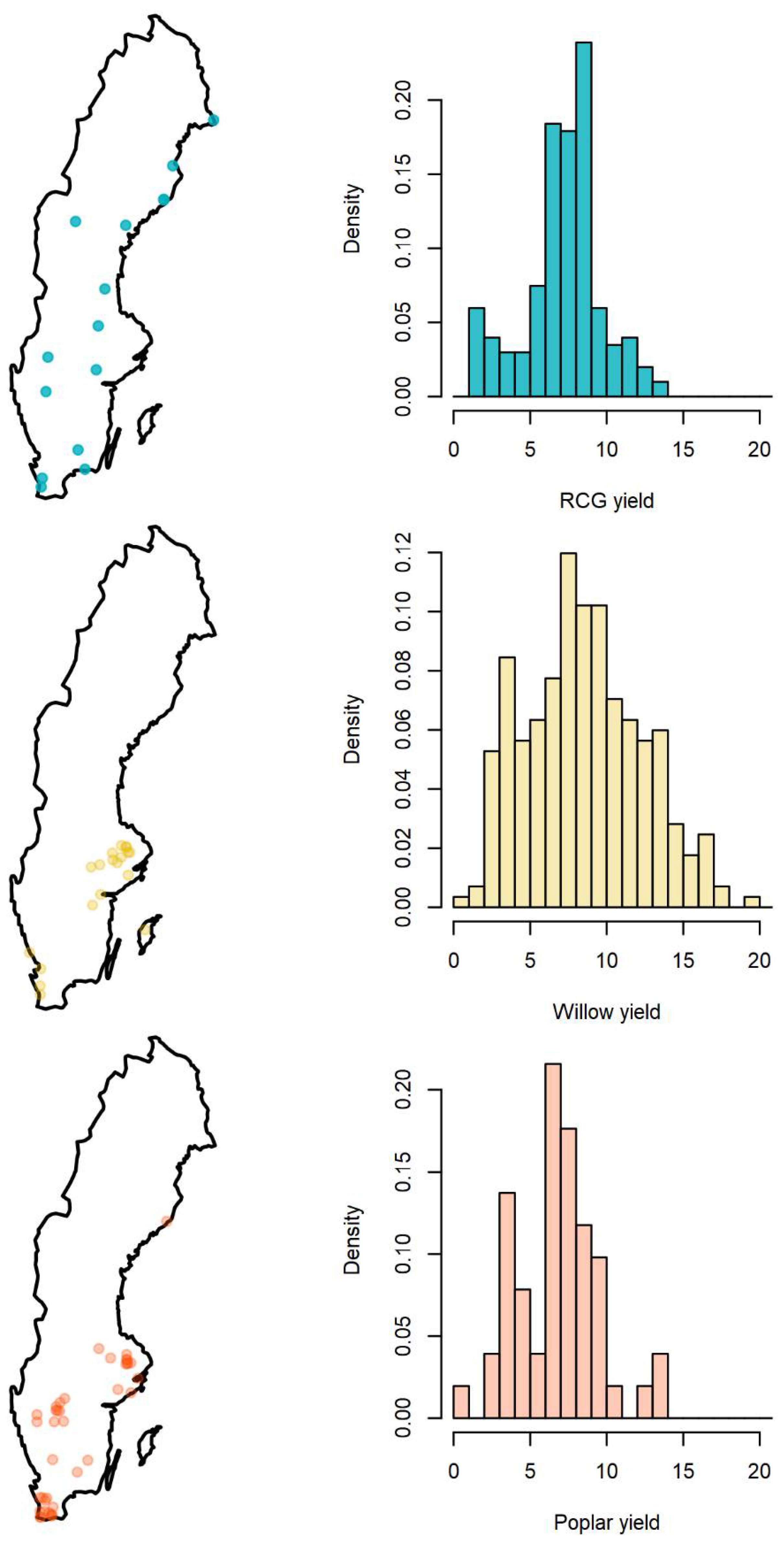
A recent open-access study addressed this challenge by building one of the most comprehensive empirical pictures yet of biomass production systems across Europe. Using harmonised spatial data for 426,783 fields and stands, covering 2,140,568 hectares across 17 countries, the authors characterised seven representative systems, including eucalypt, radiata pine, black locust, poplar and hybrid aspen, willow, miscanthus, and reed canary grass. They then assessed the land-use context around each site using 1 km buffers and CORINE land cover, translating “how mixed is the surrounding landscape?” into a Land Use Diversity Index based on Shannon diversity. The result was a practical lens for policy and planning: it showed not just where biomass is today, but where it is likely to diversify, or homogenise, the landscapes around it.

The key insight was that context dominates: the same crop can be either a corridor of diversity or an engine of simplification, depending on where it is inserted. Willow stood out as the strongest candidate for diversification, with 57% of willow plantations located in homogeneous, agriculture-dominated areas, where woody strips can introduce structural variety and potentially strengthen multifunctionality. Poplar and black locust also showed meaningful opportunities, with sizeable shares of stands situated where they could add “forested elements” into agricultural matrices. By contrast, miscanthus was often concentrated in low-diversity agricultural settings, suggesting that, without deliberate spatial planning, it may do little to raise local land-use diversity. The study also highlighted a recurring risk signal: biomass areas were highly unevenly distributed, with the largest 20% of stands accounting for the majority of total area, and thousands of very large polygons, a pattern that can translate into landscape dominance when not carefully governed. A sustainable bioeconomy is a design problem, and better maps, better metrics, and better placement rules are as important as better crops.

Read more:
Pineda-Zapata, S., & Mola-Yudego, B. (2025). European biomass production systems: Characterization and potential contribution to land use diversity. GCB Bioenergy, 17, e70057. https://doi.org/10.1111/gcbb.70057
DOI: 10.1111/gcbb.70057


China’s Rural Energy Transition: Household Pathways Beyond Coal and Firewood

The recent developments in geopolitics have been a reminder that energy is never just #energy. For decades, the global oil system has been attached to collateral developments and power struggles. As fuel becomes strategically indispensable, some states stop treating supply as a market question and start treating it as a power question.

On top of the environmental effects linked to their consumption, #fossil #fuels have been framed as national interest with hard edges. We witness in recent events: energy security slide into coercion to third countries, and sometimes into force.

In this context it is interesting to study countries aiming to buy their way out of energy dependence by changing the fuel itself. Instead of competing for oil’s geography, the route to independence goes through millions of small, local energy decisions. Decisions which at the same time suppose a cleaner alternative, from solar for electricity, #bioenergy heating options, and the gradual replacement of #coal and #oil.

China has increased significantly and consistently the share of renewables in the energy mix, achieving simultaneously energy independence and lower carbon emissions. The #energy #transition has started in the cities, but has also reached rural areas, and while it is often discussed in terms of grids and powerplants, the real shift happens at household level too. That creates a practical policy question: where do traditional fuels still dominate, and which levers can accelerate cleaner options without ignoring local realities?

In Chinese rural areas, #coal (76%) and biomass residues, especially tree branches, #firewood (84%) and #crop #residues (38%), remain central for cooking and heating. The use of LPG is, however, limited (24%) and strongly concentrated. Our future projections suggest solar uptake could expand substantially, alongside a decline of up to ~50% in coal and firewood if supportive conditions continue. Subsidies and awareness matter, and familiarity with key renewable policies is still low in some counties, which points to information gaps as a real barrier, not just income or technology.

Region-specific strategies, combining solar and biogas diffusion with smarter, cleaner use of agricultural and forestry residues for local bioenergy, backed by targeted incentives and outreach, are setting the ground for a fast energy transition in rural China, with global geopolitical and climatic effects.

Read the PDF here
Xu, X., Li, Q., Khanam, T., Selkimäki, M., Liu, G., & Mola-Yudego, B. (2025). Rural Energy Consumption in Central China: Regional Patterns, Socioeconomic Influences, and Pathways to Sustainability. Food and Energy Security, 14, e70176. https://doi.org/10.1002/fes3.70176


This work was supported by the National Key R&D Program of China, Chinese Universities Scientific Fund, the Research Council of Finland mobility programme and UNITE flagship.

Blackwater pulse

Post-fire effects on dissolved organic carbon concentrations in freshwater streams: a meta-analysis

Wildfires are often discussed through smoke, trees, and erosion, but one of their quieter legacies can travel downstream. Dissolved organic carbon (DOC), the dark, tea-coloured fraction of organic matter in water, tends to rise after fire events, especially during storms. That matters because DOC is not only a carbon-export signal, it also shapes water treatment difficulty and can increase the formation potential of disinfection by-products when drinking-water is chlorinated.

In a recent meta-analysis, Polack and colleagues synthesised evidence on how forest fires affect peak-flow DOC concentrations in freshwater streams, focusing on the moments that often drive the largest exports: high-discharge events. Across 52 effect sizes from 14 peer-reviewed publications, their multi-level modelling estimated an average 26% increase in peak-flow DOC after fire, with the strongest signal occurring early in recovery.

The pattern was not uniform. The largest increases were reported for small catchments (≤10 km²), consistent with short flow paths and stronger hillslope–channel connectivity after canopy loss and altered infiltration. Climate and landscape context also mattered: humid continental sites showed clear increases, while subarctic sites tended towards declines, suggesting that post-fire DOC trajectories can differ substantially where permafrost and cold-region hydrology dominate. The analysis further indicated stronger responses in conifer-dominated systems, and soil texture appeared informative, with loam and clay loam showing particularly pronounced increases.

Mechanistically, the synthesis aligned two ideas that are intuitive yet easy to under-sample in practice: (i) post-fire hydrology can increase near-surface runoff and strengthen the connection between burnt hillslopes and channels, and (ii) fire can generate a pool of more labile residues that leach during storm events. The authors also highlighted a practical gap for both science and management: discharge-resolved chemistry remains scarce in the literature, and geographic coverage is still skewed, which limits transferability. The implication is straightforward: if the goal is to anticipate water-quality risk after fire, monitoring needs to follow the hydrograph, not only the calendar.

Find the study: Journal of Hydrology  |  ResearchGate

Read the PDF here
POLACK, J., PUMPANEN, J., MOLA-YUDEGO, B., & BERNINGER, F. 2025. Post-fire effects on dissolved organic carbon concentrations in freshwater streams: a meta-analysis. Journal of Hydrology, 134319. doi:10.1016/j.jhydrol.2025.134319

Improving woodfuel governance in Burkina Faso: The experts' assessment


AREVALO J. 2016. Improving woodfuel governance in Burkina Faso: The experts' assesment. Renewable and Sustainable Energy Reviews Volume 57, May 2016, Pages 1398–1408 doi:10.1016/j.rser.2015.12.178. 
Over 80% of Sub-Saharan population depend on woodfuels as their main energy source, mainly firewood and charcoal. In Burkina Faso, despite the absence of reliable studies, this dependency is expected to continue and even increase in the next decades. With some of the highest annual population increments and lowest indexes of human development in the world, Burkina Faso is also among the most vulnerable countries to climate change. This study examines the challenges of governance, production and use of woodfuels in Burkina Faso on the basis of an extensive literature review and the views elicited through 13 in-depth interviews with local experts. With poverty as the underlying driver, agricultural expansion is identified as the principle driver of deforestation, followed by woodfuel production. Intensification of agriculture, agroforestry practices and promotion of on non-timber forest product businesses are some of the key opportunities recognised. While decentralisation is seen as an opportunity for sustainable resource management, the lack of resources, unclear tenure regime and corruption need to be urgently addressed. An improved management system in the Forest Management Units is also needed to avoid forest degradation. The 20 concrete recommendations made in the study should be further investigated for their consideration in a future wood energy strategy.
ScienceDirect [link]
ResearchGate [link]

Firewood truck bound to Ouagadougou

Stakeholders’ Perceptions of Bioenergy: Global policy implications

HALDER, P., AREVALO J., MOLA-YUDEGO, B. GRITTEN, D. 2015. Stakeholders’ perceptions of bioenergy- global coverage and policy implications. In: Reddy BS and Ulgiati S (Eds.), Energy Security and Development – The Global Context and Indian Perspectives. pp. 377-391. Springer. ISBN: 978-81-322-2064-0. doi:10.1007/978-81-322-2065-7_25

Abstract
Development of bioenergy systems is gaining momentum globally and bioenergy stakeholders are numerous and their perceptions are diverse. The study explored perceptions of bioenergy stakeholders by reviewing scholarly literature and complementing and validating them against primary data. The number of publications on stakeholders’ perceptions of bioenergy is increasing while geographical focus and stakeholder analysis vary considerably. Among the stakeholders, biomass producers, public, and experts are widely studied groups while the least explored are students and private developers. The majority of the studies have been conducted in North America and Europe, which indicate the importance of bioenergy in their energy policies and the role of stakeholders to influence bioenergy development in those countries. The study found that the stakeholders’ perceptions of bioenergy were not uniform and varied considerably even within a particular stakeholder group. More support for second- and third-generation biofuels is apparent compared to corn-based ethanol production. Factors such as age, gender, education, income level, and land ownership appear to influence stakeholders’ perceptions of bioenergy. The paper recommends raising awareness of bioenergy among different stakeholders and involving them while planning future bioenergy projects to improve their perceptions of bioenergy and reduce the chances of opposition. There is also a need for enhancing collaboration between renewable energy and educational policies so that young students become aware of bioenergy and can act as agents of change in our quest for renewable energies.

Springer [link]
ResearchGate [link]

Substituting fossil fuel by biofuels: an economic model perspective from the Nordic region

 article
Substituting fossil fuels by more environmentally friendly alternatives requires the use of several economic tools that include taxes and subsidies. However, their efficient use implies several challenges: How to measure quantitatively the impact of those tools in the substitution process? This recent publication aims at exploring the effects of these external factors that regulators can use for the promotion and establishment of forest-based fuels, by using a theoretical model for the Nordic sphere.

KHANAM T, MATERO J, MOLA-YUDEGO B, SIKANEN L, RAHMAN, A. 2014. Assessing external factors on substitution of fossil fuel by biofuels: model perspective from the Nordic regionMitigation and Adaptation Strategies for Global Change. doi:  10.1007/s11027-014-9608-x

Abstract
The aim of this study is to develop a theoretical model by which to demonstrate how taxes and subsidies work as external factors to substitute fossil fuel by a forest-based biofuel. For biofuels, this study predominantly considers solid-form biomass that generates electricity; for fossil fuels, it considers coal. The model results explicated with three states by using various numeric values taken from the literature. Three states are as follows: a situation without a tax and subsidy, a situation with a biofuel subsidy, and a situation with a biofuel subsidy and a fossil fuel tax. The results of the first state exemplify current fuel market situation; those of the second indicate that the aggregate demand for biofuel has shifted upwards by around 15 % and that substitution has increased by around 18 % due to biofuel subsidies being offered. Under the third state, aggregate biofuel demand has shifted upwards by around 19 %, reduced the demand for fossil fuels by around 13 %, and increased substitution by around 31 %. This state relates to a greater sense of social welfare than other two states. It is conceivable that the joint application of taxes and subsidies will succour biofuel to supplant fossil fuel in the near future.

Mitigation and Adaptation Strategies for Global Change at Springer Link [link]
ResearchGate [link]

How to introduce successfully energy crops?

 article

How to introduce energy crops and get success? The journal Renewable Energy has recently published our paper on a framework for the introduction of energy crops. In this paper, we review the different steps linked to the introduction of short rotation plantations in Sweden during the last 30 years, and include a review of our previous work as well as other authors. The final result is a conceptual framework that displays the many inter-relations between different stakeholders as well as policy actors, and provides some ideas about how to proceed when new energy crops are considered. The sources include data from existing commercial plantations, results from experimental plots, the profile of farmers adopting the plantation systems, and a review of existing economic studies on profitability and the policy framework during the period studied.

MOLA-YUDEGO B, DIMITRIOU I, GONZALEZ-GARCIA S, GRITTEN D, ARONSSON P. 2014. A conceptual framework for the introduction of energy crops. Renewable Energy 72: 29-38. Doi: 10.1016/j.renene.2014.06.012

Highlights
•The paper analyses the introduction of willow plantations for energy in Sweden in 1986–2005.
•A framework is presented to identify factors and its inter-relations.
•The framework is based on a large pool of data of growers and plantations.
•Stable policies and long-term contracts are key elements for success.

Abstract
There is currently limited experience on the introduction of new commercial crops as a source of raw material for energy uses. The present paper analyses the introduction and development of commercial willow plantations in Sweden during the period 1986–2005. A general framework is constructed in order to identify all the factors and interrelations that can describe the introduction and expansion of willow as an alternative crop for the production of raw material for energy. The factors are identified and analysed based on a broad database of information from commercial plantations, covering almost all existing plantations, and on documents referring to existing academic literature or official reports. The analysis provides with lessons that can be useful for the introduction of new energy crops in other countries and shows the possible contradictions in policy applications. The analysis confirms that stable policies and long-term contracts reduce the uncertainties associated with the cultivation. The results of this study can be of value for other countries aiming at the introduction of new crops for bioenergy.

Renewable Energy at Science Direct [link]
ResearchGate [link]

Understanding bioenergy conflicts: Case of a jatropha project in Kenya’s Tana Delta

Bioenergy is often presented as a double opportunity, to reduce dependence on fossil fuels while also promoting rural development. But large-scale bioenergy projects do not unfold in empty landscapes. They enter places with existing land uses, rights, institutions, and histories of inequality. When those realities are ignored, a project framed as green development can rapidly become a source of conflict.

In this paper, we examined the case of a proposed large jatropha plantation in Kenya’s Tana Delta, using Ethical Analysis to understand the positions, interests, and values of the main stakeholders. The case was not only about biodiesel. It was also about who has the right to decide over land, whose livelihoods count, and how “development” itself is understood by different actors.

What we found was that the conflict was structured around four major issues: land tenure, trade-offs between economic and environmental benefits, representation and power relations, and different approaches to development and sustainability. Some actors emphasized jobs, investment and local growth. Others stressed biodiversity, grazing rights, traditional land uses, and the risks of weakly regulated land deals. The disagreement, therefore, was not simply about being for or against bioenergy, but about what kind of rural future was being imposed, and for whom.

Perhaps the most important message was that many of the tensions could have been anticipated. The study identified shortcomings in technical feasibility studies, limited community participation, weak consultation processes, and an insufficient regulatory framework. In that sense, the problem was not only the crop or the investor, but the broader governance setting that allowed such a project to move forward without properly addressing land tenure, local rights, and competing claims over the landscape.

For me, this is where the study still feels very relevant. If hashtag#bioenergy is to contribute to hashtag#climate goals and hashtag#development, it cannot rely only on promises of investment or emission reductions. It also needs credible feasibility, transparent institutions, and meaningful participation from the start. The paper points to Free, Prior and Informed Consent, stronger oversight, and better policy coordination as necessary steps. That is a simple but important lesson for hashtag#policy and hashtag#governance: sustainability is not only about the final product, but also about the process through which land use decisions are made.

Arevalo, J., Ochieng, R., Mola-Yudego, B., & Gritten, D. (2014). Land Use Policy, 41, 138–148. https://doi.org/10.1016/j.landusepol.2014.05.002

Can we get good quality timber from Eucalyptus? Coppice-with-standards plantations in Brazil

Eucalyptus plantations are a very important source for biomass. In recent years, there have been important developments increasing the efficiency of the production and at the same time diversifying the future uses of the wood, including timber. The present paper is reviewing some of the silvicultural treatments proposed and used in Brazil:

FERRAZ FILHO A, SCOLFORO J RS, MOLA-YUDEGO B. 2014. Coppice with standards silvicultural system applied to Eucalyptus plantations - a review. Journal of Forestry Research 25(2):237-248.


Abstract: We review the management of Eucalyptus species under a coppice-with-standards (CWS) silvicultural system. CWS management results in product diversification, permitting production of small and large scale timber from the same stand. Eucalyptus species are suitable candidates for CWS management because: there are large worldwide plantation areas, sprouting capacity is high, and eucalypts are multipurpose species. We discuss (1) short rotation Eucalyptus coppice management for energy and pulping and (2) Eucalyptus seedling management for solid wood products. We review the literature and discuss experiences with Eucalyptus managed under the CWS system. We also assess projects dealing with Eucalyptus coppice management, stand density regulation, pruning, and stand and wood quality. The growth environment of the standard trees (heavy competition up to the first harvest, free growth afterwards) coupled with long rotations (>20 years) results in high quality logs for solid wood products. Early pruning should be applied to enhance wood quality. We propose a system for the silvicultural management of Eucalyptus under the CWS system, elaborating on the consequences of initial planting density, site productivity, and standard tree densities as well as timing of basic silvicultural applications.

Keywords: stand density regulation, coppice management, pruning,  silvicultural system, stand production diversification, CWS


Journal of Forestry Research [link]
ResearchGate [link]

Developing forestry curricula: experiences from a Kenyan- Finnish project

The International Forestry Review journal has published our paper on forestry capacity development in Kenya. The paper details the process of the curriculum review undertaken at the University of Eldoret in collaboration with the University of Eastern Finland. The need analysis carried out revealed which were the subject-specific and generic competencies needing more attention, allowing for the prioritization of these areas in the review. Not surprisingly, among them was the area of bioenergy.

AREVALO, J., PITKÄNEN, S. & KIRONGO, B. 2014. Developing forestry curricula:experiences from a Kenyan-Finnish project. International Forestry Review, 16 (1) 78 86(9)


Abstract

In the context of the challenges that forestry education faces, the improvement of curricula to increase its attractiveness and address the changing needs of the society is imperative. With the aim of improving the forestry education offered at the University of Eldoret in Kenya, a joint project was carried out together with the University of Eastern Finland during 2011–2012. One of the tasks of the project was to revise the curriculum of the undergraduate programme in forestry. According to the needs assessment, the biggest gaps in subject-specific competencies were in areas such as forest information systems and forests and climate change, as well as in generic competencies such as computer skills. The need to update and expand contents (e.g. on dryland forestry) and learning methods (e.g. more practicals) clearly emerged. The proposed changes in the context of various initiatives to improve forestry education in Kenya and worldwide are discussed. 

Keywords

forestry education; curriculum development; competencies; employability

International Forestry Review Journal at Ingenta Connect [link]
ResearchGate [link]

Cradle-to-gate Life Cycle Assessment of forest operations

The journal Journal of Cleaner Production has published our paper on Life Cycle Assessment of forest operations in Europe. The paper review different operations mostly concerning plantations in different countries. The future use of plantations should focus also in the environmental effects of their management, in addition to the traditional focus on yield and profitability. This paper aims to set a common ground for comparison, despite the many and diverse management regimes that are used in plantations.

GONZÁLEZ-GARCÍA, FEIJOO G, MOREIRA M T, MOLA-YUDEGO B. 2014. Cradle-to-gate Life Cycle Assessment of forest operations in Europe. Environmental and Energy consequences. Journal of Cleaner Production. In Press. http://dx.doi.org/10.1016/j.jclepro.2013.11.067.


Abstract

Life Cycle Assessment (LCA) has become a common and standardized methodology to evaluate the environmental profiles of forest systems. In this study twelve different European forest systems dedicated to wood production for industrial or energy uses (maritime pine, spruce, willow, poplar and Douglas-fir) were compared in detail from environmental and energy points of view considering a cradle-to-gate perspective. The scenarios included the silviculture of these tree species in Sweden, Germany, France, Italy and Portugal. A database with inventory data was constructed for each scenario. The scenarios considered were standardized using the same methodological life cycle assumptions in order to establish comparisons for an overall analysis.

The results show a relatively wide range of variations in terms of biomass productivities as well as environmental and energy profiles. These variations depended on the tree species, management regime (different levels of fertilization, time of harvesting and intensity of forest operations) and the overall conditions of the location of the plantations. However, regardless of the scenario considered, operations related to logging such as harvesting and forwarding were identified as hotspots mainly due to the remarkable fuel requirement. Fertilization activities and fertilizer production (when required), thinning processes (when necessary) as well as weed control related processes reported also notable contributions to the categories under assessment.

If these twelve scenarios are compared with other similar studies for the same tree species, significant differences can be found which are mainly linked to different forest management regimes and regional characteristics.

The choice and the promotion of a specific forest biomass for industrial applications should not only depend on the biomass yield and the harvesting age but it should be also based on the intensity of forest practices since it considerably affects the environmental and energy profiles.

Keywords

Douglas-fir; Maritime pine; Norway spruce; Poplar; Wood biomass; Willow plantations


Journal of Cleaner Production at Science Direct [link]
ResearchGate [link]

Wood pellet production clusters

The journal Renewable Energy, has recently posted our latest paper on pellet production. The paper identifies the location of most of the major pellet producer plants in Europe, and makes a geo-statistical analysis of them. This method helps us to identify those production clusters as well as those areas where the production is more concerntrated and dominated by few producers, and also the extend and main characteristics of the European pellet markets.

MOLA-YUDEGO B, SELKIMÄKI M, GONZALEZ-OLABARRIA J R. 2013. Spatial analysis of the wood pellet production for energy in Europe. Renewable Energy. Doi: 10.1016/j.renene.2013.08.034.

Abstract

The distribution of the wood pellet plants in Europe was analysed using a geo-statistical kernel based approach, in order to identify and define cluster-regions with high concentration of pellet production capacity. For that, a database with the location of pellet plants, as well as its capacity, was constructed, identifying 378 pellet plants with annual capacities over 1000 t, and an aggregated production of 11.5 million t. The geo-statistical methods facilitated the analysis of the plants with regards to their market position at global and local level.

At a European level, four main production areas were identified, defined as: “Central Europe” (Bavaria, Austria, and neighbouring areas of France, Switzerland and Italy), “Scandinavia”, “Finland”, and the “Baltic”. These areas concentrated over 50% of the pellet production, although presented different characteristics regarding market establishment and development, their role in the global pellet trade and their raw material availability. The paper provides with methodological tools to identify and characterise the main pellet production areas in Europe that can have further economic and policy applications.

Keywords

Pellet trade; Bioenergy; Kernel models; Supply; Energy; Bioenergy


Renewable Energy at Science Direct [link]
ResearchGate [link]


Biomass supply chains: mapping and simulation


WINDISCH J, RÖSER D, MOLA-YUDEGO B, SIKANEN L, ASIKAINEN A. 2013. Business process mapping and discrete-event simulation of two forest biomass supply chains. Biomass and Bioenergy. In Press.

Abstract
Previous research in forest biomass procurement has been focussing on reducing harvesting costs. However, organisation and management of supply chains as well are considerable cost factors. The present study applies a methodological framework to investigate two forest biomass supply chains in different operational environments of two European countries (Finland and Germany) in order to identify the business processes and stakeholders making up the supply chains using a business process mapping methodology. Additionally, the work time expenditure for organisational and managerial tasks for each of the supply chains is estimated using discrete-event simulations.

The business process mapping revealed that the number of processes in the supply chains varies considerably involving 213 project objects (activities, information items, others) in the Finnish supply chain and 268 in Germany. The work time expenditure on managerial and organisational tasks assessed by discrete-event simulation was 1483 min/100 m3 in the Finnish and 1381 min/100 m3 in the German supply chain. Even though the results of the study are company specific and cannot be directly generalized, as each supply chain reflects the characteristics of its operational environment, the proposed methodology has shown its potential for the in-depth analysis of supply chains in forest business and it is a step towards holistic cost calculation and business process improvement approaches on supply chain level.

Keywords
Supply chain management; Discrete-event simulation; Forest bioenergy; Organisation of work; Forest fuel procurement

From Biomass and Bioenergy at ScienceDirect
ResearchGate link